
A Commercial Note by OP Contract
The Contract Nobody Read
Two very different contract failures – and the cost of assuming everyone knows what the contract says.
- Author
- John Paul Oliver
- Reading time
- 6 min read
- Audience
- For fabricators & contractors
The contractor had done exactly what the project needed. They brought in extra people, mobilised additional heavy-moving equipment and accelerated the work. The construction team was pleased. The project manager thanked them. As far as everyone on site was concerned, it had gone well.
Then, as I was closing out the account, a €170,000 variation arrived.
I knew the work had happened. That wasn't the issue. What I wanted to know was simple: where was the contractual cost notification? Where was the supporting information? Why was this the first time the additional money had appeared?
The acceleration had been instructed in writing. But the contractor had not notified its additional cost impact as required under the contract. We knew it was accelerating; with roughly twenty other contractors on the project, we had no reason to assume that meant it would exceed its agreed price. No additional cost had been notified, assessed or included in the final cost forecast.
A €170,000 variation that should have been straightforward
There was no dispute that the contractor had worked hard or delivered what was requested. The problem was that the commercial process had been left until the end.
Instead of checking a timely notice and agreeing the cost while the work was happening, we spent months going back through timesheets. Was that person part of the original scope or brought in specifically for the acceleration? Were those hours additional? Were the rates the contractual rates? Which equipment was already allowed for?
Those questions were answerable, but they were being asked months after the event, when they were much harder to resolve. The client also had to be told that a final account forecast which had been stable for months now needed a substantial increase.
In the end, the contractor was paid the €170,000 in full. But the process took months, consumed time on both sides and delayed money that could have been dealt with much earlier.
The contractor hadn't failed to do the work. It had failed to administer the change as the contract required. That distinction matters.
The letter that should never have been sent
I saw the opposite problem on another project in Sweden. This time, it wasn't the contractor who had overlooked the contract. It was the client's representatives.
The contractor was having difficulty getting paid. It issued a formal letter saying that payment was thirty days overdue, that it intended to suspend its work and that it would seek recovery of standing costs during the suspension period.
Within about half an hour, the client's legal representative had prepared a furious response. The contractor was accused of being in breach of contract, told to get back to work and warned that any downtime would be charged against its account. The letter went out without being checked with the commercial people who knew the contract.
The reaction appeared to be based on what the legal representative expected the contract to say, rather than what it actually said. The project was governed by the Swedish AB 04 standard form. Under its provisions, a contractor can have a right to suspend work for sufficiently serious non-payment, provided the applicable conditions and notice requirements are satisfied.
The contractor had taken the position that it was exercising that right. Once the contractual position was properly considered, the client's team had to acknowledge that the contractor was entitled to act as it had. What followed were unnecessary meetings and an embarrassing retreat from a letter that should not have been issued in that form.
The contractor wasn't trying to be obstructive. It was trying to get paid, using a mechanism available under the agreement. Our response made the client look as though it didn't understand its own contract.
Experience is useful. Assumptions are dangerous.
These are different stories, but they point to the same problem.
In the first, the contractor assumed that because it had been instructed to accelerate, and because everyone knew and appreciated what it was doing, the money could be sorted out afterwards. In the second, the client's legal representative assumed that suspension must be a breach because that was the position they expected from other projects.
Neither assumption was a substitute for reading the actual agreement. The lesson isn't that contractors should always give more notices, or that clients should always be softer in their correspondence. It is that each side needs to understand the obligations and remedies that apply to the contract in front of them.
And when a formal letter arrives, there is almost never any merit in treating it like a Teams message. Read it. Check the relevant clauses and deadlines. Get the right people involved. Then respond.
What to check when a construction contract lands on your desk
I don't begin with a forty-page summary that nobody will use. I start with the basics of what we have actually agreed:
- ScopeWhat are we contracted to deliver? What is included in the price, and what would represent a genuine change?
- DatesWhat are the milestones, completion dates and any obligations to update the programme?
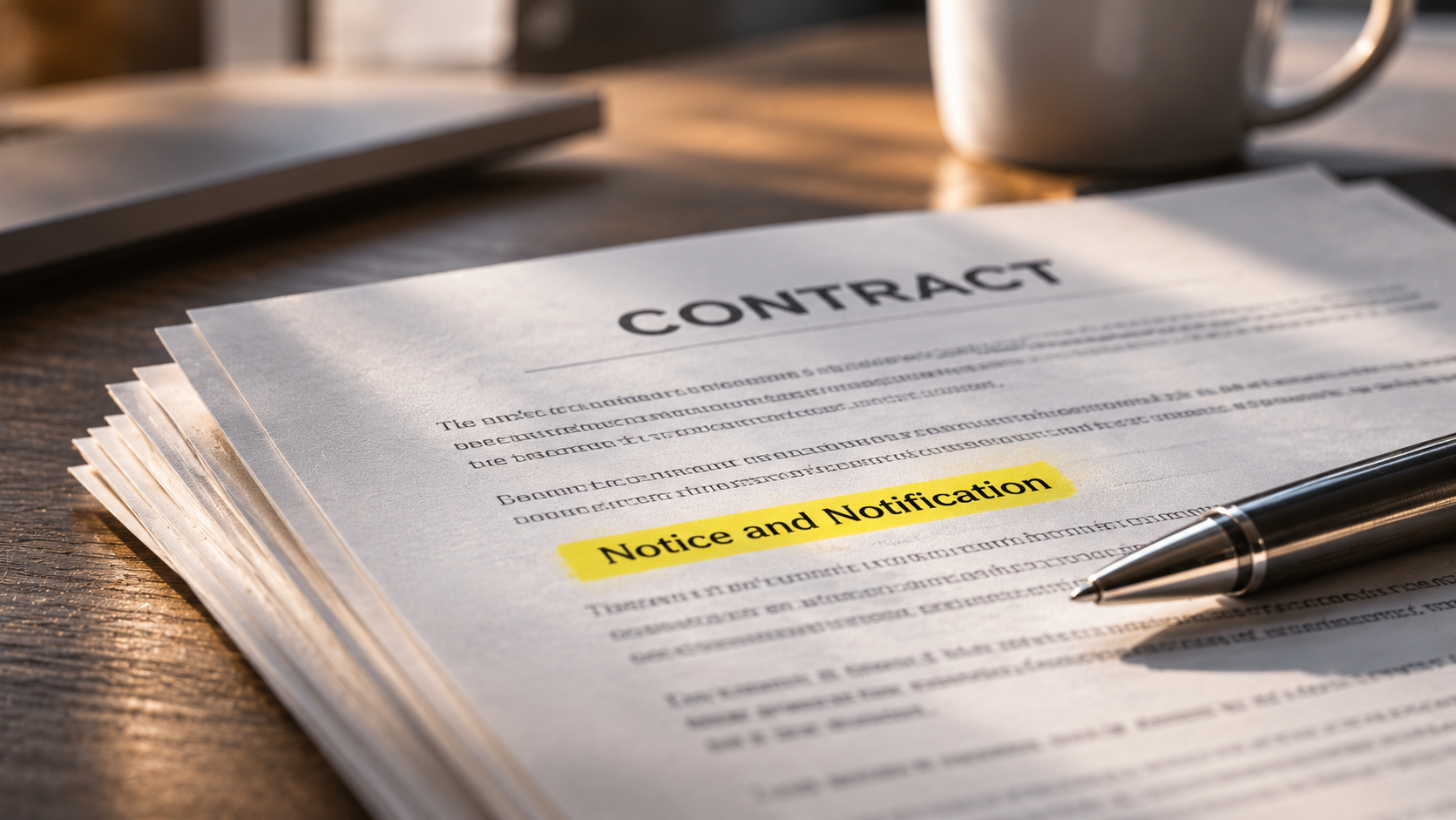
- NoticesWhich events must be notified, by whom, and within what period? Some deadlines are short enough that missing one can seriously weaken a position.
- MethodWho must receive the notice, what must it say, and how must it be sent? A conversation on site is not necessarily the notice the contract requires.
- Evidence and reportingWhat records will support a change, and how does the potential cost get into the commercial register and project forecast?
The result should be practical enough for a project manager, site manager or engineer to use without having to become a contracts specialist. That is the point of a good Contract Playbook: making important obligations visible before someone misses them.
The real cost of not reading the contract
The most frustrating part of the €170,000 variation was that the work was legitimate and the money was eventually paid. We had created months of unnecessary administration and delayed payment simply because a basic cost-notification process had not been followed.
The most frustrating part of the suspension letter was that the client damaged its credibility for no good reason. A short review of the applicable contract would have changed the tone of the response completely.
Contracts are not just documents for lawyers to argue over when something goes wrong. They tell the project team what to do, when to do it and how to protect the commercial position of everyone involved.
Read them early. Turn the important clauses into a workable process. And before sending an angry letter – or a six-figure variation – make sure you have followed the contract you actually signed.
Frequently asked questions
What is a construction contract notice?
A contract notice is a formal, written communication the contract requires when certain events happen, such as a change, a delay or extra cost. Most contracts set out who must send it, what it must say, how it must be sent and by when. A conversation on site or an email to the project manager is not always enough.
What happens if a contractor doesn't notify a variation on time?
It depends on the contract. Some contracts make notice a condition of any extra payment or time, so late notice can seriously weaken a claim. Even when the money is eventually paid, late notice usually means months of reconstructing records after the event.
Can a contractor suspend work for non-payment?
Some contracts and some laws give a contractor the right to suspend work when payment is seriously overdue, as long as the right conditions and notices are in place. Whether that right applies depends on the contract and the country. Check the actual agreement before responding to a suspension notice.
How can a project team keep track of its contract obligations?
Turn the key clauses into a short, practical reference covering scope, dates, notices, method and evidence. Site and project teams can use it without becoming contract specialists. That is what an OP Contract Playbook does.
Download the sample playbook (PDF)Need help understanding your contract?
Discuss your contract obligations, notices or outstanding commercial position with John Paul Oliver.